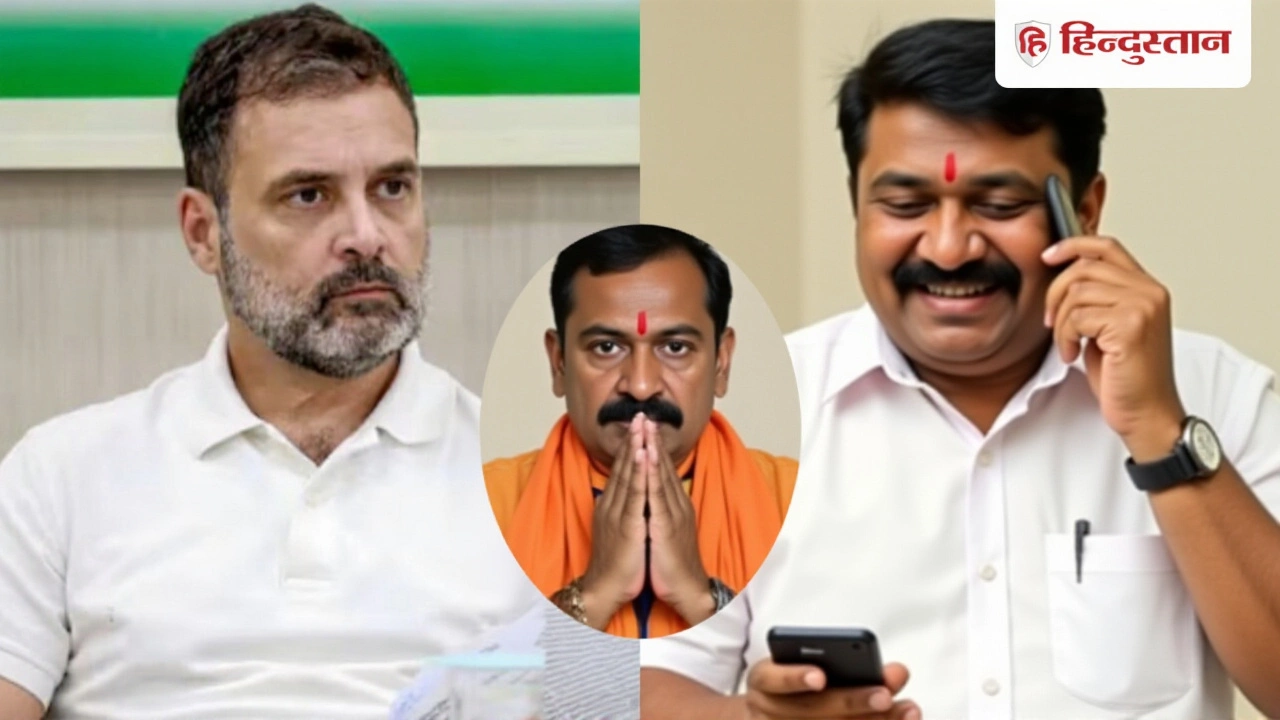
It’s the political equivalent of preaching from a pulpit you just walked away from. The Indian National Congress, which once loudly condemned the appointment of an election official to a top bureaucratic post in West Bengal, has done the exact same thing in Kerala. Now, the opposition is having a field day.
In a move that has ignited a fresh firestorm in Indian state politics, V.D. Satyan, Chief Minister of Kerala, appointed Rathan U Kelkar, the IAS officer who oversaw the recent state assembly elections, as his personal secretary. Critics aren’t letting it slide. They’re pointing out the glaring hypocrisy: this is the very practice Rahul Gandhi, the Congress party president, fiercely opposed when a similar appointment happened in West Bengal just months ago.
The twist? It wasn’t even the same type of appointment. But in the cutthroat world of Indian electoral politics, nuance rarely survives the first headline.
The West Bengal Precedent
To understand why Kerala’s latest decision is causing such an uproar, we have to rewind to West Bengal. After the Bharatiya Janata Party (BJP) took power in the eastern state, Chief Minister Suvendu Adhikari made waves by appointing Manoj Agrawal—a senior election official—as the state’s Chief Secretary. That’s the highest bureaucratic rank in any Indian state government.
At the time, Rahul Gandhi didn’t hold back. He publicly criticized the move, arguing that it compromised the perceived neutrality of the Election Commission of India (ECI). The argument was simple but potent: if the person who supervised your election victory suddenly becomes your top bureaucrat, where does their loyalty lie? With the constitution or the chief minister?
The Congress party framed this as a threat to democratic integrity. It was a strong moral stance, one that resonated with voters wary of executive overreach. But now, less than a year later, the tables have turned.
Kerala’s Contradictory Move
Here’s the thing about Kerala’s situation: it’s slightly different, yet politically identical. V.D. Satyan didn’t make Rathan U Kelkar the Chief Secretary. Instead, he appointed him as his own personal secretary. While the Chief Secretary role oversees the entire state administration, the CM’s secretary works directly under the chief minister, handling sensitive files and acting as a key liaison.
Rathan U Kelkar was the Additional District Magistrate who managed the election process in Thiruvananthapuram district during the May 2026 Kerala Assembly Elections. His performance was widely praised for its efficiency and lack of bias. So, on paper, this looks like a reward for good service. But in practice? It looks like a payoff.
The BJP and the Left Democratic Front (LDF)—the main opposition alliance in Kerala—have seized on this immediately. Their message is blunt: "You called us corrupt for doing something similar. Now you’re doing it too. Who are you fooling?"
The Neutrality Debate
This isn’t just petty score-settling. It touches on a deep-seated anxiety in Indian democracy: the independence of the bureaucracy during elections. The ECI relies on state officials to conduct free and fair polls. When those same officials are then rewarded with plum postings by the winning party, it creates a chilling effect. Future officers might wonder: do I follow the rules, or do I help the party that will eventually hire me?
Legal experts note that while there’s no explicit law banning such appointments, the All India Services (Discipline and Appeal) Rules emphasize impartiality. Appointing an election supervisor to a position where they report directly to the politician they helped elect raises serious questions about conflict of interest.
"It undermines public trust," says Dr. Arun Kumar, a constitutional law professor at Delhi University. "Even if the appointment is technically legal, the perception of bias is damaging. Democracy runs on faith, and faith erodes when optics look bad."
Political Fallout and Future Implications
The backlash in Kerala has been swift. Opposition leaders have demanded an explanation from the Congress-led United Democratic Front (UDF) government. Meanwhile, national media outlets are running side-by-side comparisons of Rahul Gandhi’s past tweets condemning Suvendu Adhikari and V.D. Satyan’s current press releases praising Rathan U Kelkar.
What’s next? The Congress party has so far defended the appointment as a recognition of merit. They argue that Rathan U Kelkar earned his position through hard work, not political favor. But that defense rings hollow when juxtaposed with their earlier rhetoric in West Bengal.
If this trend continues—if more states start rewarding election officials with high-profile posts—we could see a gradual erosion of bureaucratic neutrality. And that’s a problem no party can afford to ignore.
Key Facts at a Glance
- Who: V.D. Satyan (CM, Kerala), Rathan U Kelkar (IAS Officer), Rahul Gandhi (Congress President)
- What: Appointment of an election-supervising officer as CM’s secretary
- Where: Kerala, India
- When: Late 2026, following the May 2026 Assembly Elections
- Why it matters: Highlights alleged double standards in political accountability regarding election neutrality
Frequently Asked Questions
Why is the appointment of Rathan U Kelkar controversial?
The controversy stems from the fact that Rathan U Kelkar oversaw the election process in Thiruvananthapuram during the 2026 Kerala Assembly Elections. By appointing him as his personal secretary, Chief Minister V.D. Satyan appears to be rewarding an official who facilitated his party's victory. This mirrors a similar move in West Bengal by Suvendu Adhikari, which Congress leader Rahul Gandhi had previously condemned as a violation of election neutrality.
Did Rahul Gandhi criticize similar appointments in the past?
Yes. In 2021, after Suvendu Adhikari became Chief Minister of West Bengal, he appointed election official Manoj Agrawal as the state's Chief Secretary. Rahul Gandhi publicly criticized this decision, arguing that it compromised the independence of the Election Commission and created a conflict of interest for civil servants involved in electoral processes.
Is it illegal to appoint election officials to government posts?
There is no specific law in India that explicitly bans appointing election-supervising officers to government positions after an election. However, such moves often violate the spirit of the All India Services (Discipline and Appeal) Rules, which mandate impartiality. While legally permissible, these appointments are frequently challenged in court on grounds of bias and conflict of interest.
How does this affect the credibility of future elections in Kerala?
Critics argue that rewarding election officials with lucrative posts creates a perverse incentive for bureaucrats to favor the ruling party during polling. If officers believe that helping a candidate win leads to career advancement, their neutrality may be compromised. This could erode public trust in the fairness of future elections in Kerala and potentially other states if the trend spreads.
What is the difference between a Chief Secretary and a CM's Secretary?
The Chief Secretary is the highest-ranking bureaucrat in a state, overseeing all departments and implementing government policy across the board. The CM's Secretary, however, works directly for the Chief Minister, handling confidential files, coordinating inter-departmental issues, and acting as a key advisor. While both are powerful roles, the CM's Secretary is closer to the political executive, making the appointment more sensitive in terms of perceived political loyalty.