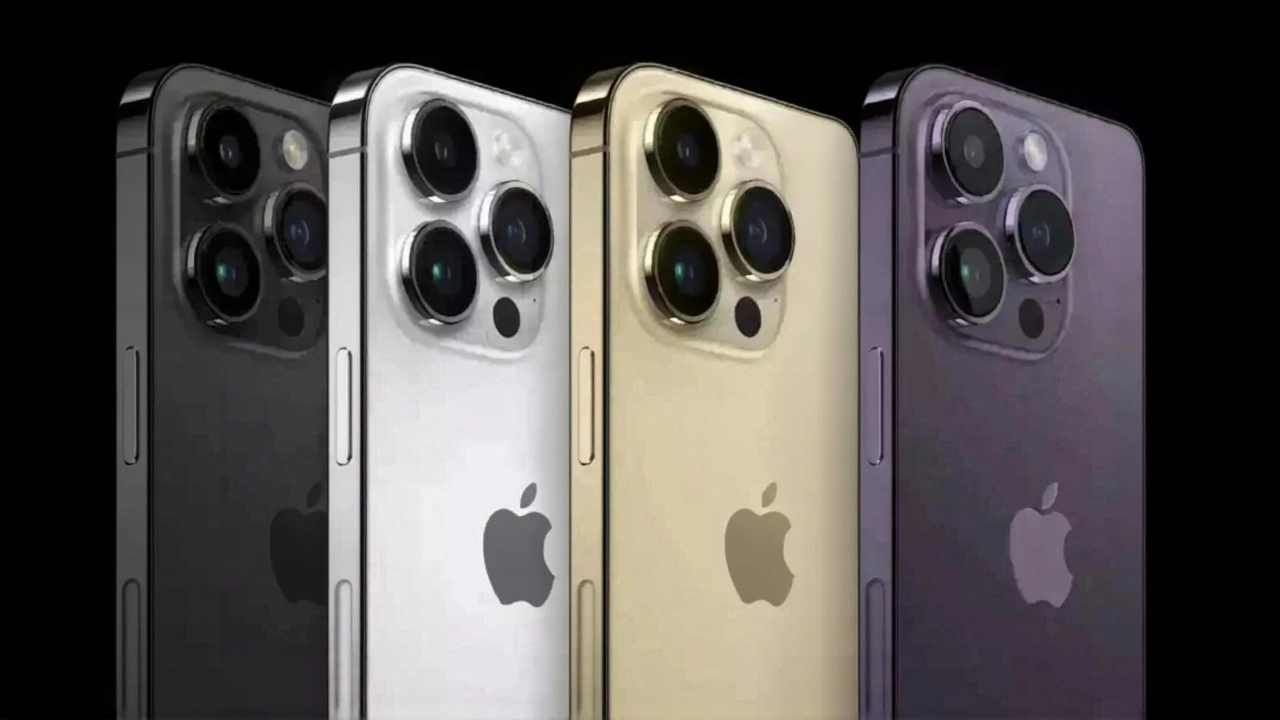
For many Indian smartphone buyers, the iPhone 16 has gone from a luxury item to a bargain — iPhone 16 prices have plummeted to as low as Rs. 36,650 during Black Friday sales, a staggering 54% drop from its original launch price of Rs. 79,900. The deal, active across major retailers like Croma, Amazon, and Flipkart, is turning heads in a market where premium iPhones have long been out of reach for middle-income households. What’s more, the discounts aren’t just flat price cuts — they’re layered with bank offers, trade-in bonuses, and no-cost EMIs, making the iPhone 16 feel like a completely different product than the one Apple launched just months ago.
How the Discounts Add Up — And Why Prices Vary So Much
The confusion among shoppers isn’t accidental. Different retailers are stacking discounts in different ways, creating a patchwork of final prices. At Croma, the iPhone 16 (128GB) is listed at Rs. 39,990 after combining a Rs. 13,410 flat discount with exchange bonuses and bank cashback. That’s a Rs. 39,910 reduction — nearly half the original price. But here’s the twist: that Rs. 39,990 price doesn’t include the extra Rs. 4,000 you can save with an SBI or ICICI credit card EMI transaction. Some buyers are reportedly walking away with the phone for under Rs. 36,000 after all incentives are applied.
Meanwhile, Amazon lists the base price at Rs. 66,900 — a 16% discount — but adds another Rs. 4,000 off for qualifying credit card users. Flipkart’s listing shows Rs. 69,900, but tacks on a Rs. 149 Protect Promise fee, which feels like a subtle nudge to buy extended warranty. The lowest price — Rs. 36,650 — comes from Tech Research Online, which claims it’s based on a full bundle: trade-in of an older iPhone, bank discount, and retailer cashback combined. The lack of standardization means savvy shoppers are comparing not just the sticker price, but the total cost after every possible deduction.
Why Croma Is Winning the Black Friday Battle
While Amazon and Flipkart rely on broad, platform-wide deals, Croma is playing a different game. Its sale, running from November 22 to November 30, 2025, is structured like a clearance event — not just a discount. The retailer is offering up to Rs. 15,000 in exchange bonuses for older iPhones, plus Rs. 5,000 in loyalty points for existing customers. One customer in Bengaluru told us she traded in her iPhone 13 Pro and walked out with the iPhone 16 for Rs. 35,200. "I didn’t think I’d ever own a new iPhone," she said. "Now I’m wondering why I waited this long."
Industry insiders say Croma’s strategy is a direct response to Apple’s slowing sales in India. Last year’s iPhone 15 sold poorly compared to expectations, and Apple’s market share in the premium segment dropped to 18% in Q3 2025 — its lowest in three years. The Black Friday push isn’t just about moving inventory; it’s about repositioning the iPhone 16 as a value proposition, not just a status symbol.
iPhone 17 Emerges as the New Budget Flagship
While the iPhone 16 gets the headlines, Apple’s real surprise this season is the iPhone 17 (256GB), now priced at Rs. 45,900 — down from Rs. 82,900. That’s a 45% discount, and it’s becoming the go-to device for small businesses and students. Tech Research Online notes that companies are now bundling the iPhone 17 for employees, calling it a "strategic value device" — a term rarely used for Apple products before. The iPhone 17 Pro Max, meanwhile, sits at Rs. 72,800, still premium, but now competing with Samsung’s Galaxy S25 Ultra, which launched at Rs. 79,999.
For the first time, Apple’s pricing tiers are starting to mirror Android’s. The iPhone 17 isn’t just cheaper — it’s positioned as a capable alternative to the Pro models, with nearly identical cameras and chip performance. This shift suggests Apple is no longer relying solely on brand loyalty to drive sales in India.

What This Means for the Future of Smartphone Pricing in India
This Black Friday isn’t just a seasonal sale — it’s a signal. For years, Apple resisted deep discounts in India, fearing it would devalue its brand. But with competition from Samsung, Xiaomi, and OnePlus tightening, and with Indian consumers increasingly price-sensitive, Apple had to adapt. The fact that the iPhone 16 is now selling for less than half its launch price — and that retailers are willing to absorb losses to move units — suggests a new era is beginning.
Analysts expect this trend to continue into Diwali 2026. If Apple maintains these discount levels, even mid-tier buyers may start considering iPhones over Android flagships. The real test? Whether Apple will keep these prices post-holiday. So far, they haven’t raised them back up after last year’s sale. That’s a quiet but powerful message: the premium smartphone market in India is changing, and Apple is no longer setting the rules.
FAQ
Why is the iPhone 16 so much cheaper now than at launch?
The iPhone 16’s price drop is due to aggressive Black Friday promotions by retailers like Croma, Amazon, and Flipkart, combining flat discounts, bank cashback, trade-in bonuses, and no-cost EMIs. Apple’s slower-than-expected sales in India pushed retailers to clear inventory fast, leading to discounts as high as 54% — something unthinkable just two years ago.
Is the Rs. 36,650 price real, or just a marketing trick?
It’s real — but only if you combine multiple offers. The Rs. 36,650 price requires trading in an older iPhone, using an SBI or ICICI credit card for EMI, and taking advantage of Croma’s exchange bonus. It’s not a single discount; it’s a bundle. Buyers who don’t have an old phone or qualifying card will pay closer to Rs. 40,000–45,000.
Should I buy the iPhone 16 or wait for the iPhone 17?
If you want the best value, go for the iPhone 17 (256GB) at Rs. 45,900. It has nearly the same chip and camera as the iPhone 16 Pro, but with better battery life and updated software support. The iPhone 16 is still a great deal at Rs. 39,990, but the iPhone 17 gives you more storage and future-proofing for the same price as last year’s base model.
Are these discounts only available during Black Friday?
Most of these deals end by December 1, 2025, but Apple has kept post-holiday prices lower in India than in other markets. After last year’s sale, the iPhone 15 stayed at a 20% discount for months. Don’t expect prices to jump back to Rs. 79,900 anytime soon — the trend toward value pricing is here to stay.
Can I get these discounts in smaller cities?
Yes. While Croma’s physical stores are mostly in metros, Amazon and Flipkart ship nationwide. Bank offers are tied to your card, not your location, and trade-in programs work across India. Even in Tier-2 cities like Jaipur or Lucknow, buyers are reporting the same final prices after all discounts are applied.
Is it safe to buy an iPhone during Black Friday sales?
Absolutely — as long as you buy from authorized sellers like Croma, Amazon, or Flipkart. These retailers offer genuine Apple products with full warranty. Avoid third-party sellers on marketplaces who offer prices below Rs. 35,000 — those are often refurbished, gray-market, or fake units. Stick to official channels, and you’ll get the same warranty as a full-price purchase.